Just as sure as empires developing throughout human history, empires are also sure to fall as well. The remnants of various empires have persisted across cultures and times. These distinct cultural characteristics prove the lasting impacts of an empire, even after they dissipate. Death Row is no exception to this. Death Row’s legacy includes its physical music; the famous records that were released by some of the biggest artists in hip-hop history. However, a cultural legacy was left by the label as well. Even after the dissolution of the empire following the loss of its major artists, the characterization of the artists mentioned previously has cultivated and manifested itself in the persona that is adopted by many rap artists following the fall of the label.
There are several motifs whose origins can be traced to Death Row. One of these motifs is the outlaw persona that has persisted throughout rap, including with modern-day artists. This characterization not only includes legal trouble surrounding crimes committed by artists but also through violent altercations between artists and their industry and urban rivals. This pattern of violence translating into record sales began with Snoop and Shakur, with the former being the headline of a famous murder trial and the latter being the victim of both a robbery and a murder –both of which involved him being attacked with a firearm.

Snoop Dogg during his murder trial in 1996
This pattern is then witnessed with artists who later gained popularity in the early 2000s, like Jayceon “The Game” Taylor and Curtis “50 Cent” Jackson, both of which were shot in apparent gang-related murder attempts.
This “thug” culture was then elaborated on by Snoop by openly affiliating with gangs. In earlier gangsta rap groups, the gang culture that was propagated was not affiliated with any specific gangs. The most famous group to date, NWA, had subject matter related to gang activity –drug dealing, attacking rivals, disdain for law enforcement– but did not openly associate themselves with specific gangs. However, Snoop Dogg openly endorsed the Long Beach Crips, one of the first artists to rap about his neighborhood gang.
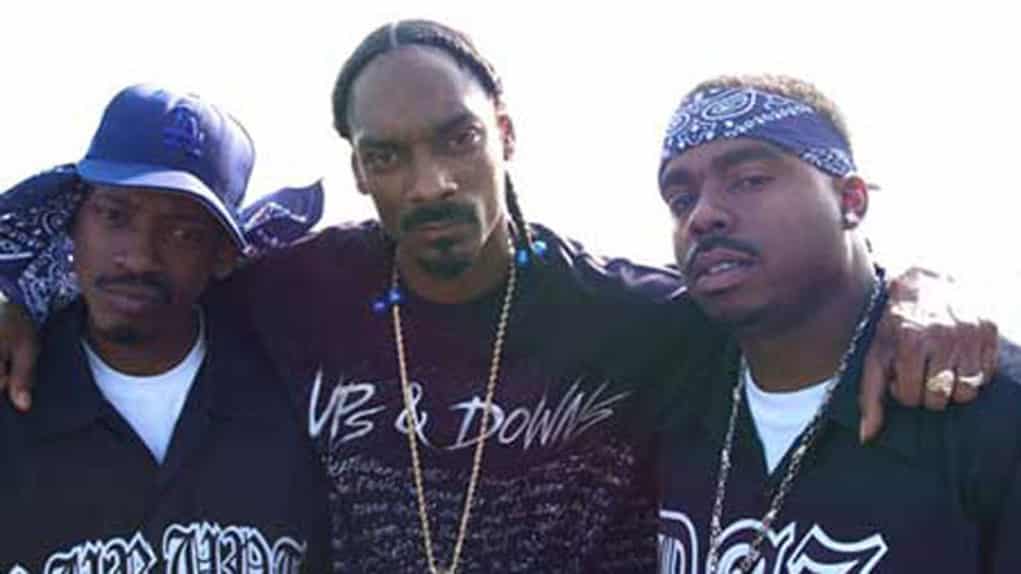
Snoop Dogg with associates at an unknown event. The color blue is associated with any faction within the overarching Crips gang. Their rivals, the Bloods, are associated with red.
This motif has become extremely common with artists of similar backgrounds from underdeveloped, large, urban areas. Recently famous (and active) artists like Schoolboy Q, Vince Staples, and YG have subject matter relating to their respective homeland gangs. The endorsement of gangs has become a common act of artists who want to ground themselves in an organization that is easily recognizable. The simple mention of a gang or neighborhood associated with a gang allows an artist to identify with an organization that audiences have already been exposed to by previous rap frontiersmen. It is also a way for newer artists to pay homage to once-active beacons of the genre and garner respect for their upbringing and “street credit.”

Rosecrans is a large street that runs throughout the greater LA area. It is the referenced by many artists openly affiliated with Compton Bloods because of its easy recognition.
Tupac contributed to the status quo of famous rappers with his various tattoos relating to street culture. Although Shakur had an abundance of tattoos, and some even citing scripture, the most prominent tattoo was his “Thug Life” script across his stomach. In addition to this, he also had the word “MOB” across his bicep.
Tupac’s chest, stomach, and back tattoos
To a large portion of America, Shakur’s tattoos were perceived as taboo because of their open association with violent gang culture. Many artists following Tupac have gotten similar tattoos; Wiz Khalifa, Travis Scott, and Chief Keef to name a few.
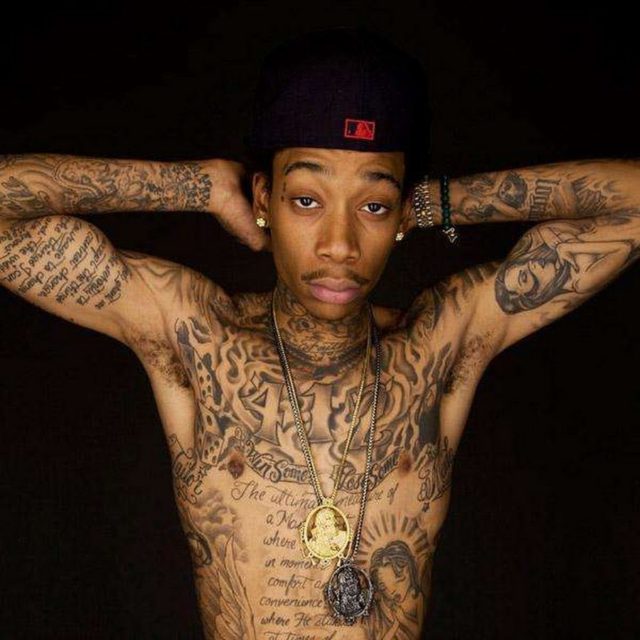
Artist Wiz Khalifa and his various tattoos
Similarly, to gang affiliation, tattoos associate an artist with a rough, gritty culture that goes far to distinguish itself from other genres. Tattoos are a way for artists to not only stay with the status quo of the industry but also to set themselves apart from their industry counterparts. A tattoo is specific to an artist; it relates to their upbringing, experiences, and beliefs.

The Mercedez Benz that Tupac Shakur and Suge Knight were passengers in during the drive-by shooting that killed Tupac.
Tupac’s also contributed to the standard-issue rap persona after his death because it served as a wakeup call for the violence that was associated with the rap industry. The artist’s death was the climax of a long history of rap artists and labels settling their differences with violent altercations. Shakur’s demise showed that the violent personalities of hip-hop artists had consequences that could not be evaded by anyone, including the most famous artists of the time. His untimely passing would prove to be a wakeup call for change in the industry as a whole. The next year, the owner of Bad Boy records, Sean “Puffy” Combs and Snoop Dogg declared a truce to the explosive East/West Coast hip-hop feud. While artists continued to rap about industry feuds, the real-life violence that many Death Row artists participated in or were victims of seemingly dwindled. No artists on the same level of fame as Tupac have been murdered for their fame since his death.
Tupac’s reputation did not dwindle, but it erupted even more than when he was alive. This level of posthumous fame is largely due to his death creating a Christ-figure for the rap industry. Even to this day, there are very few artists who speak any ill words regarding Tupac, and those who do receive backlash from the industry. This association between Shakur and the Christ of rap is further solidified with his first posthumous album, Don Killuminati: the 7 Day Theory, which had an album cover with Tupac crucified on a cross.
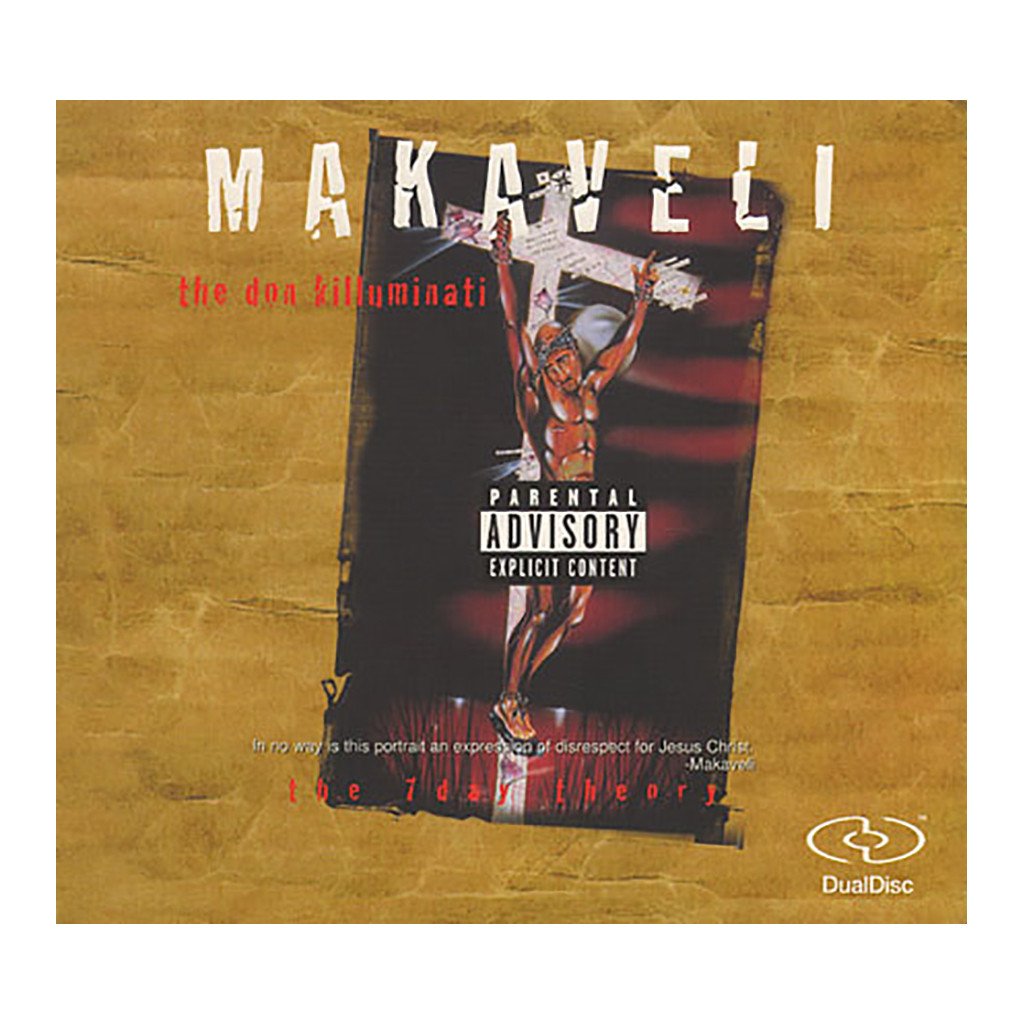 This adoration for Shakur following his death solidifies his legacy as one of the greatest rap artists to ever produce music. Although he was not the most lyrically sophisticated or musically innovative, Shakur’s persona, swagger and the uncertainty surrounding his life and death allow him to be remembered by generations of listeners.
Ultimately, the crumbling of Death Row’s relevance in the rap genre led to the development and widespread acceptance of the thug persona that many modern artists within the rap industry adapt to fit their own personal style. The label’s demise also burgeoned the idolization of Tupac Shakur as one of, if not the most recognizable and fondly remembered artist in the rap history, despite various moral and legal issues surrounding the artists prior to his death.
Westhoff, Ben. Original Gangstas. Hatchette Books, 2016.
Daunt, Tina. “Rapper Snoop Doggy Dog is acquitted of Murder.” Los Angeles Times. February 21, 1996. http://articles.latimes.com/1996-02-21/news/mn-38322_1_rapper-snoop-doggy-dogg. November 10, 2018.
Nguyen, Hao. “Hip-Hop Gem: Doggystyle Broke The Sales Record For A Debuting Artist.” https://www.stopthebreaks.com/gems/doggystyle-broke-sales-record-debuting-artist/. November 10, 2018.
Diehl, Matt. “The Endless Fall of Suge Knight.” Rolling Stone. July 6, 2015. https://www.rollingstone.com/music/music-news/the-endless-fall-of-suge-knight-73346/. November 10, 2018.
Reed, Ryan. “Tupac’s final words revealed by police officer on scene of murder.” CNN. May 23, 2014. https://www.cnn.com/2014/05/23/showbiz/celebrity-news-gossip/tupac-last-words-rs/index.html. November 11, 2014.


















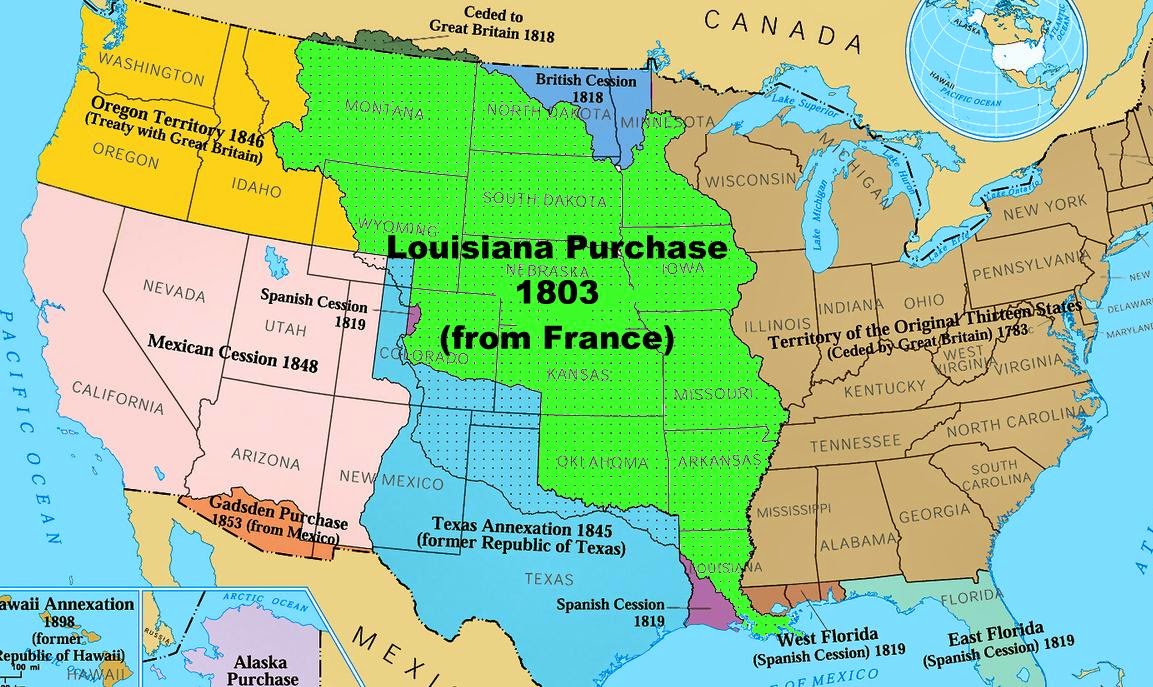 Land added following the Mexican-American war. The president at the time, James K. Polk was an advocate for rapid geographical expansion for the US.


![The Chronic [LP] [PA] - Front_Standard](https://pisces.bbystatic.com/image2/BestBuy_US/images/products/9033/9033299_sa.jpg;maxHeight=640;maxWidth=550)

