
Often it is said that history is written by the victors. This timeless saying has relatively recently manifested itself in memes –usually, images (although they can be bodies of text, videos, or gifs) that are meant to be comedic. They’re almost like global inside jokes spread throughout the internet.
A plethora of popular memes circulated within recent years that spread the notion that France has a weak military and resolve. Consequently, it is proposed that France is prone to surrender.
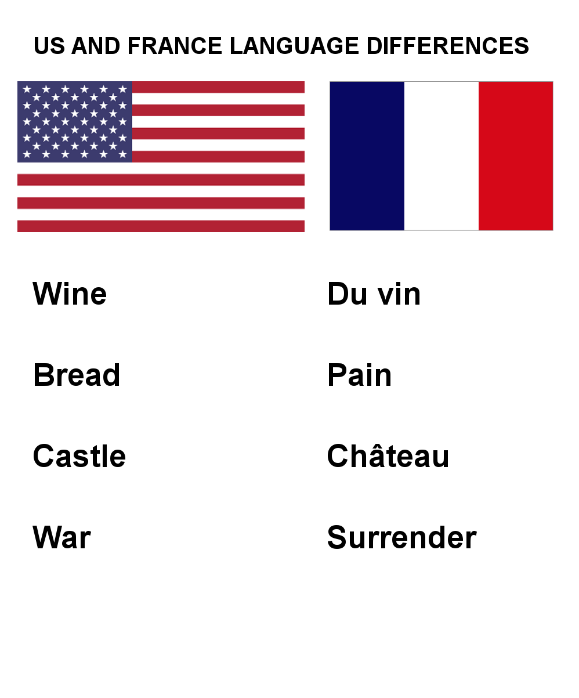
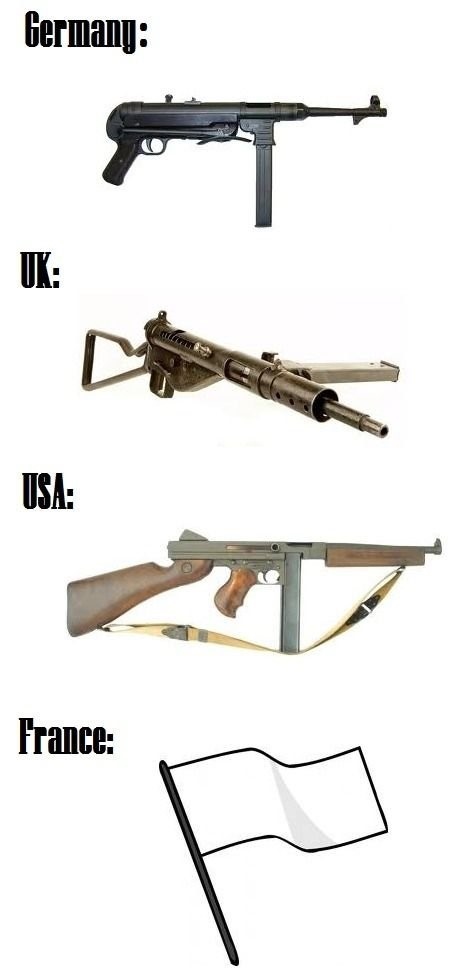
Although lighthearted, the memes surrounding France during wartime illustrates the larger concept discussed in humanities core that history can be rewritten if views contrary to the popular “truth” are suppressed.
During Winter quarter, Dr. O’Toole argued that the Incans were “ass-kickers” and did not simply allow the Spanish to conquer their empire. Dr. O’Toole elaborates by emphasizing the unfortunate timing of Spanish arrival; which followed a large-scale smallpox outbreak and an Incan civil war. She also counters several generally accepted myths about the Spanish invasion that stem from misconceptions and a lack of context when analyzing primary sources.
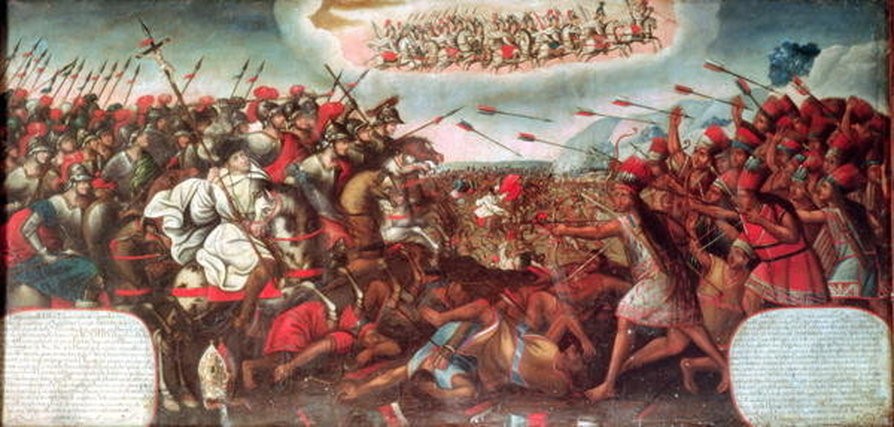
Similarly to the Incans, modern perspectives about France’s military relevance have arisen from misconceptions and a lack of context for the circumstances that the country faced in the second world war.
The idea that France is a weak military power is largely a modern one. France has historically been a major empire in Europe and throughout the world. Many of France’s military experience has been gained through their wars and feuds with England, a long-time rival. However, the most influential French victories include the Napoleonic Wars, the Franco-Austrian War, and the Crimean War.
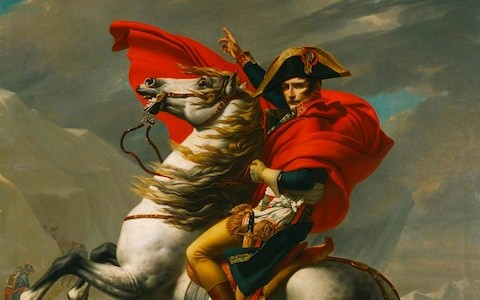
These victories exemplify the immense power of the French military because of their ability to compete with other large and powerful European empires at the time. Napoleon was specifically known for his ability to wage fast-paced, decisive battles in his favor; a talent that allowed him to expand the French empire to grand heights of wealth and power. In fact, the French army was so capable under Napoleon that a coalition of Austrian, Prussian, Russian, and Swedish troops were gathered in order to defeat him at the Battle of Leipzig in 1813.
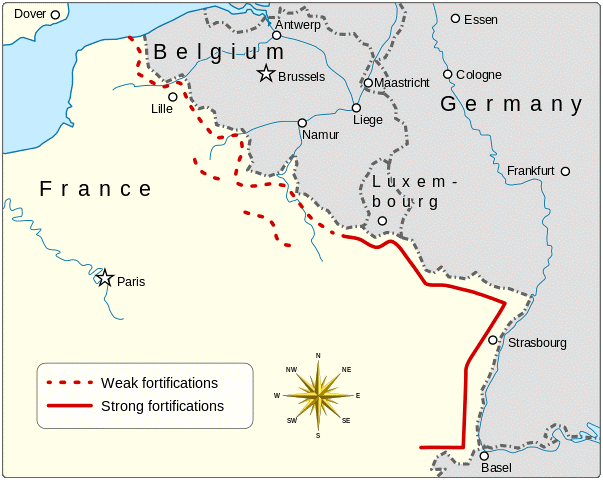
A common example of French failure in modern times is the Maginot Line. It was a stretch of modern, technologically advanced fortifications along the French-German border. It was constructed in the 1930s in order to deter a border invasion of Germany. A common misunderstanding of the Maginot Line was that it served to stop a German invasion altogether. However, the line was meant to cause the German forces to deter their course of invasion and allow the French military enough time to garner enough resources to counterattack.
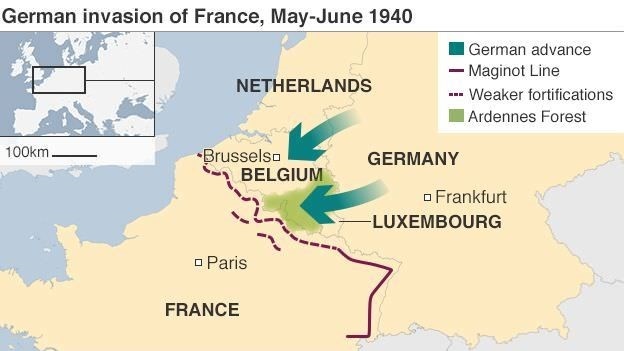
The real fault of the Maginot line was a lack of forces along the Ardennes Forest, which is previously famous for a battle during the Great War within the forest. France believed that German tank divisions would be unable to navigate the dense forest and consequently devoted fewer resources and troops there. While the German tanks did invade through the forest, the overall notion that France was unprepared or unable to fight Germany is an oversimplification of what truly happened. With the given context of influential French politicians and military leaders at the time, the Maginot line and planned counterattack were strong contingency plans but poorly implemented due to an underestimation of the agility of modern German armor.
As Dr. O’Toole highlighted in lecture, the Incans were not simply letting the Spanish conquistadors conquer them. Tito Cusi Yupanqui was a descendent of the last legitimate Sapa Inca and led armed resistance to the Spanish empire for several decades spanning from 1632 to 1671 when he died of natural causes.
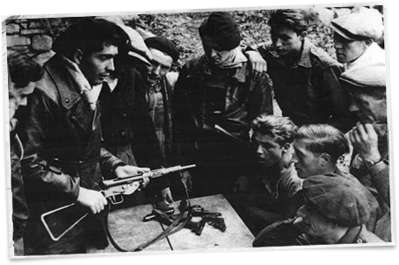
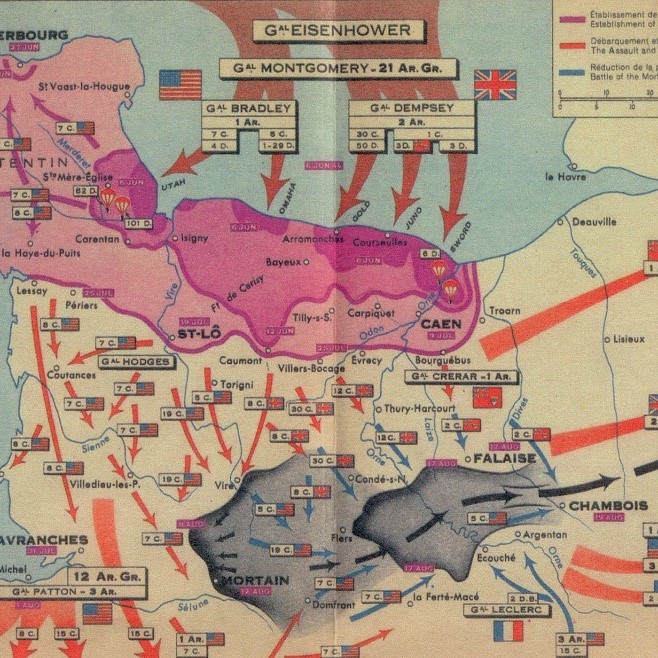
Similarly, the French also had armed resistance towards their Nazi occupants. The French resistance was an underground movement that sabotaged German supplies and equipment and provided valuable military intelligence to the British and US military. In fact, French spies played instrumental roles in preparing for the Normandy invasion in 1944. The French resistance also saw combat once the invasion began, which was not limited to Normandy alone. Pockets of resistance fighters also slowed down German reinforcements to the beaches. This coalition of forces attacking occupied France marked the beginning of the Allied retaking of Europe on the Western Front.
Ultimately, historical analysis –no matter how informal– requires multiple perspectives and an adequate amount of context to allow someone’s audience to understand a relatively accurate account of history. History is a subject that is meant to be debated; having a strong argument advances the conversation and avoids oversimplifying and downplaying the roles, power, and contributions of civilizations/empires that are not as imposing as they once were.
Works Cited
Jebbe, Jason. “Revision and “Rebirth”: Commemoration of the Battle of Nations in Leipzig.” German Studies Review. October 2010.
David, Saul. “Is This the Finest Biography of Napoleon Ever Written?” The Telegraph, Telegraph Media Group, 10 Mar. 2018, http://www.telegraph.co.uk/books/what-to-read/finest-biography-napoleon-ever-written/.
“The Maginot Line – 11 Fascinating Facts About France’s Great Wall.” MilitaryHistoryNow.com, 9 Apr. 2018, militaryhistorynow.com/2017/05/07/the-great-wall-of-france-11-remarkable-facts-about-the-maginot-line/.

 Andrew's Discussion of Various Empires
Nice intro! It’s a great attention grabbers for us when you’re talking about memes (since honestly who doesn’t love them) and then you appropriately used it to transition into your more serious topic. The research and historical facts you implemented to prove your point that the French weren’t just a weak military force were very convincing, and the images as well as videos were great too. It definitely ties in with what we’re doing in humanities too, so overall it’s a great blog post. Keep it up! 🙂
LikeLike