During the last lecture for the UCI Humanities Core course, Professor Lazo provided an overview of many of the subjects taught during the three quarters that the course has run. Students were given the option of cheering to show a collective appreciation for each lecturer during the course, and Professor Lazo discussed some of the main themes of the course.

The one thing that stood out to me during Dr. Lazo’s lecture was when he posed a question along the lines of “what do you think the end of empire is?” One student responded that there is a possibility that there is no end to empire. Another student proposed anarchy, or the absence of a government, as the end of empire. Dr. Lazo described anarchy as “the absence of power structures,” and continued to state that the student’s proposal was an interesting one.
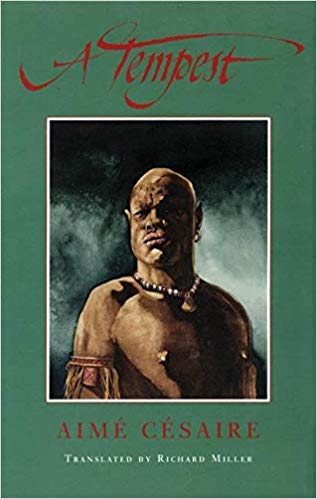
The idea that there is no end to empire is, in my opinion, rooted in pessimism. The idea is grounded in the idea that the existence of empires throughout all of sedentary civilization indicates that there will always be empire, it may just assume different forms. It could also entail that the legacy of empire will always be evident in society. During our discussion of Amé Césaire’s A Tempest, the ability for people living in the Caribbean islands to move past a legacy of colonial presence is severely restricted because their culture is so intertwined with their former ruler’s culture.
The trends of the past are not indicative of the trends of the future. Just because empires have dominated human history for about 4000 years does not mean they will always be present. Also, the origin of a new culture being rooted in colonization does not mean that the people are subject to live in the shadow of empire. As new generations of people are born, their culture continues to evolve and what it means to be a part of a culture changes as well.
Concerning the anarchy suggestion, I do not believe that in order to rid the world of empire power structures need to be absent completely. I feel like much of the course tends to imply that the existence of power structures implies that the less powerful party will always be abused. However, this perspective tends to overlook the root cause of injustice in a power structure. Power is not inherently abused, corrupt people who obtain power just use it for to accomplish their own will.

For example, Prospero’s use of magic in Shakespeare’s The Tempest is his source of power; it separates him from everyone else. However, the magic itself isn’t corrupt, it is used by a vengeful Prospero to torture Caliban into submission, enact revenge on the people who conspired against him, and to manipulate his daughter into marrying Ferdinand. The magic itself is not the main evil of the narrative, it is Prospero in this case. Similarly, power over someone else is not evil itself. It is who has power, how they use it, and why they use it that is the difference between empire and a modern society.
I ultimately think that courses like Humanities Core indicate that the end of empire is inevitable. By exposing people to the injustices of the past their perception of a better future can change to benefit everyone in an equal way. The educators of today are ensuring that the leaders and citizens of tomorrow have the background knowledge and perception to make educated, thought-out decisions and move past a pattern of empirical exploitation of those deemed inferior. By giving everyone a chance to speak for themselves the world can move past abusing power structures and move towards coexistence without empires.


