
J. M. Coetzee’s novel “Waiting for the Barbarians” follows a magistrate in a relatively small frontier settlement during the visit of a Third Bureau officer, Colonel Joll. The novel deals with various dark topics and oppositions. One of the major motifs throughout the novel is representation, and Coetzee is ultimately arguing that in order for an empire to be successful it must represent its “enemies” in a way to have its subjects support the empire’s authoritarian rule.
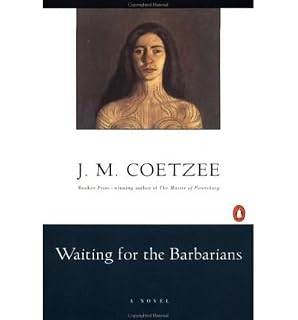
The cover for Coetzee’s novel “Waiting for the Barbarians”
The first major scene that discusses representation is four days into Colonel Joll’s first expedition to find barbarians that are planning an attack against the empire. He returns local fisher-people, which infuriates the magistrate. He exclaims “Did no one tell him these are fishing people? . . . You are supposed to help him track down thieves, bandits, invaders of the Empire! Do these people look like a danger to the Empire?” (Coetzee, 17).
The magistrate’s initial reaction illustrates the disconnect between local administrations and the empire as a whole. Empires thrive on the ability to have an enemy to blame and attack, while the local administration would like to keep peace with the local people in order to encourage interaction and trade, and also because the small settlement does not have the resources to fight a war with the local barbarians. To the magistrate, the captives he sees are the people who have traded at the settlement for years, and whose culture he has gotten to know some parts of. As a result, he finds them familiar. However, to Joll, if they are not a part of the empire, they are surely against the empire.
The response to the magistrate is that Colonel Joll had them captured because they hid as the military convoy was approaching. The local fisher-people are well aware that the empire thrives on brute force and unwavering cruelty towards barbarians because the barbarians serve to directly oppose and destroy the empire in the minds of its inhabitants. It would be natural for the fisher-people to hide when they see the military, even if they have done nothing wrong because they are afraid of what may happen if the military deems them a threat just for being different from their own citizens.
The soldier also adds that Joll did not bring someone who spoke the native language on the expedition, and as a result, he could not question them in the field and had to send them back as prisoners. This illustrates that Joll did not actually intend to peacefully clarify any rumors that had spread through the empire. Instead, Joll was looking to capture as many barbarians he could, regardless of them being hostile or not, and take the time he needed to torture the answer he wanted out of the barbarians.
Colonel Joll’s actions can be compared to the events that led to the Mexican-American war. Texans and Mexico had several disputes over the boundaries of Texas/Mexico, namely which river served as the natural border. A US patrol went onto Mexican land and was promptly attacked by Mexican forces. However, the US used this as a way to depict Mexico as bloodthirsty and a justification for war. In both scenarios, the empire (US) went into land that was not theirs looking to cause an altercation and used it as a justification to further their own agenda. In reality, the barbarians were hiding from an oppressive and brutal regime and the Mexicans were defending their land. These events were skewed to serve the empire’s needs because an empire needs an enemy in order to further its conquest against people who “deserve” it.
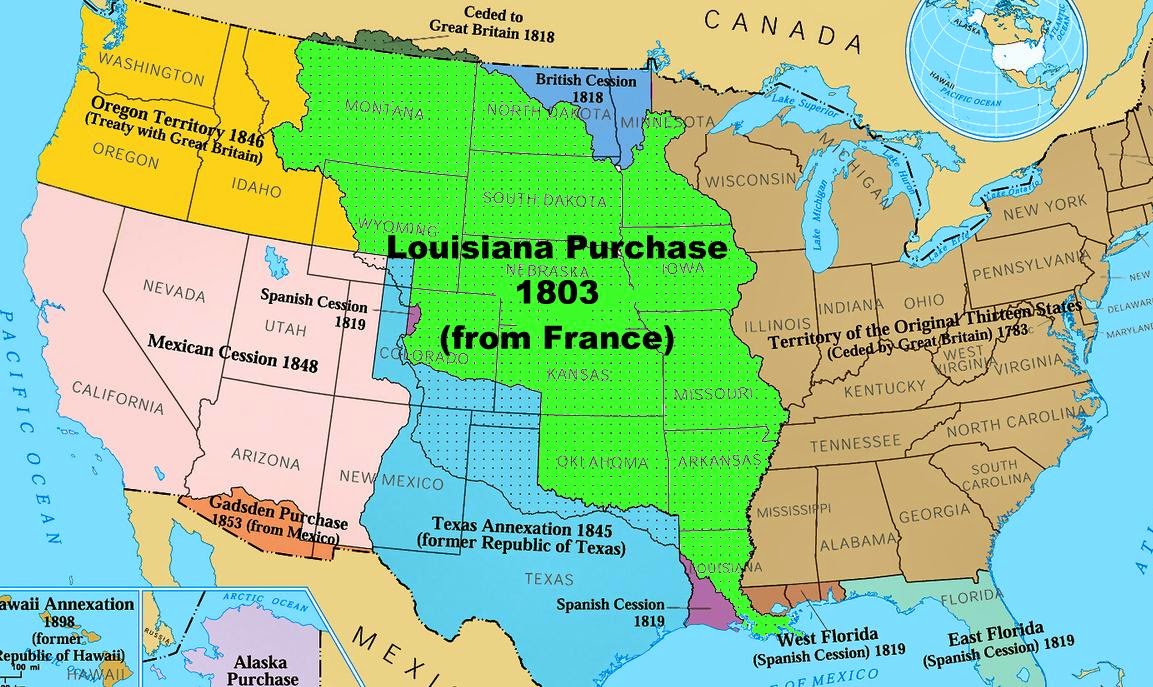 Land added following the Mexican-American war. The president at the time, James K. Polk was an advocate for rapid geographical expansion for the US.
The magistrate understood the conflict that Joll instigated by attacking the peaceful locals. He attempted to rectify the damage dealt by Joll for interrogating and torturing the fisher-people and the damage he dealt by keeping the barbarian woman for his own personal desires by returning the woman he was peacefully holding captive to other barbarians. However, negotiating with the empire’s constructed enemy upsets the enemy description that the empire created, and the magistrate was imprisoned, starved, and tortured as a result. In fact, he was accused of “treasonously consorting with the enemy” for simply returning a woman to her people (77). The empire did not truly mean to put him on trial for his actions, but to actually make an example of anyone who “aids” their “enemies.”

The magistrate was subject to multiple forms of torture, including a form that can be compared to waterboarding, which was used by the US in modern day until the Obama administration banned its use.
The magistrate was depraved and reduced to a shell of a human because he refused to believe that the barbarians were his enemy, and by criticizing the empire for being cruel to people who did not truly deserve it. In some ways, the magistrate admits that the empire is the truly barbaric force because of their habits of torturing and abusing the people it comes into contact with, including its own.
Coetzee ultimately outlines the necessity for an empire to have a force to villainize and conquer in order to keep expanding and to be successful. In reality, the empire wanted to create the notion that the barbarians would attack them in order to be able to aggressively remove the “threat.” The plan fails because the barbarians would not fight Joll’s company, but instead led them into the marsh, desert, and mountains were many died or went missing.
Bibliography
Basoglu, Metin. “Waterboarding is a Severe Form of Torture: Research Findings.” 25 December 2012. Mass Trauma, Mental Health & Human Rights. Image. 11 December 2018.
Coetzee, J.M. Waiting for the Barbarians. New York: Penguin Books, 1982.
“Oxford Encyclopedia of the Modern World.” 2008. Oxford Reference. Subject Reference. 10 December 2018.
Penguin Books. “Waiting for the Barbarians: A Novel.” n.d. Amazon. Image. 10 December 2018.
Thought Monkey. “The Mexican American War in 5 Minutes.” 12 January 2016. Youtube. Video. 10 December 2018.


I enjoyed how your blog make a connection between the fictional empire of the novel with the U.S. It really reflects on Coetzee’s decision to leave the empire nameless, making it applicable to all empires. How have people in our history reacted to the enemies our empire created for us compared to the people in Waiting for the Barbarians?
LikeLike