
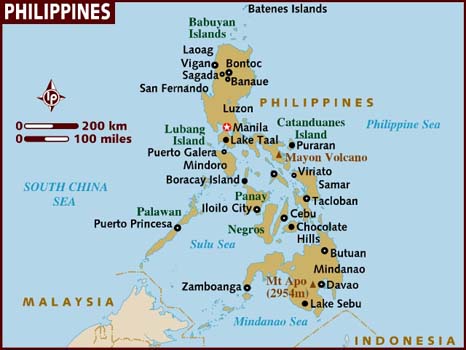
During her discussion of United States colonialism in the Philippines, Professor Linda Vo introduced the point that imperial powers justify their own endeavors by creating the notion that colonized peoples benefit from the presence of an empire. This broad idea relates to US imperialism because of Rudyard Kipling’s poem, “the White Man’s Burden”. In his poem, Kipling addresses the audience, the United States, and urges them to colonize the Philippines and civilize the savage people. More specifically, Kipling directs the United States to “serve your captives’ need” and describes the colonized as “half devil and half child” (Kipling 4, 8). Kipling’s poem echoes the attitude of the American public: simultaneously dehumanizing and stating a lack of maturity among colonized nations.
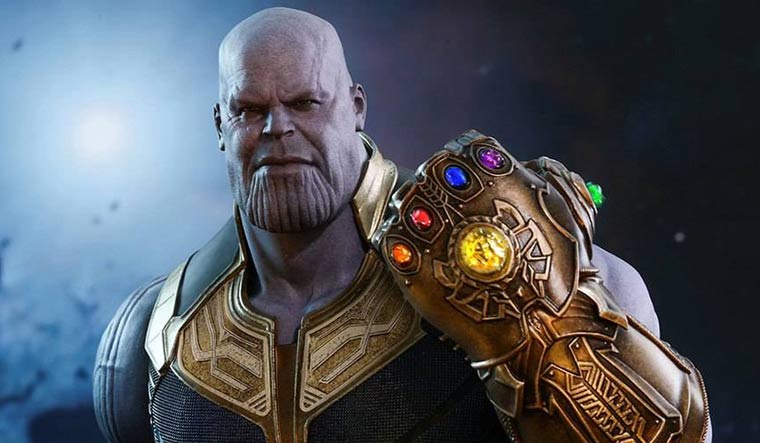
Thanos is a villain in both the Marvel cinematic universe and the Marvel comics. Recently, he has appeared as the main villain in both Avengers: Infinity War and Avengers: Endgame. He is the last surviving member of an alien race who became extinct due to complications that arose from overpopulation. As a result, Thanos travels from planet to planet and eliminates half of the population in order to prevent the same fate of his own planet. His ultimate goal is to collect six powerful stones, each filled with a fraction the power of the cosmos. Once he attained all six of the stones at the end of Infinity War, Thanos wiped half of all life in the universe from existence and retired to isolation.

Thanos’ situation reflects the United States’ colonialism in the Pacific islands because of his method of self-justification for his actions. The United States created a moral responsibility for colonization by stating that indigenous inhabitants of the Philippines were not able to rule themselves so America was morally obligated to civilize the Philippines through colonization. Similarly, Thanos believed that every inhabitant of the universe is unfit to realize the inevitability of overpopulation and the end of existence, so it is his moral obligation to keep the population of the universe in control.
Thanos’ belief in a moral obligation can be witnessed in both Infinity War and Endgame. During a conversation in Infinity War with Dr. Strange, a magical sorcerer and defender of one of the infinity stones, Thanos revealed that he first presented his solution to overpopulation when his species was still alive. He states that most people “would not see reason” and his plan was ultimately rejected. The significance of this line is that it reveals that Thanos believes that his solution to overpopulation is the only logical solution, and that anyone unwilling to accept his plan of action is unable to see the reality of the situation. Consequently, Thanos believes it is his duty to take action and commit atrocities to keep the population down. This notion is also seen during an earlier conversation with his adoptive daughter, Gamora. He says that “it is simple calculus. This universe is finite; its resources are finite.” He then finishes his dialogue with “and I am the only person to see that, or at least the only one with the will to act on it.” Similarly to his brief conversation with Dr. Strange, Thanos assumes a position of logical and moral superiority because he is the only being to realize the dire situation of the universe while also having the mental and physical fortitude to carry out a plan to prevent the death of the universe.
Thanos’ justification of killing half of the universe through use of a moral obligation separates him from everyone who opposes him; he is just doing what is, in his mind, the only solution to an inevitable problem. Thanos believes he is the only being to be able to complete the task that will “save” the universe. Similarly, the United States created a used a fabricated moral responsibility to “civilize” people in order to have a reason to colonize new territories.
Works Cited
Avengers: Infinity War. Dirs. Anthony Russo and Joe Russo. 2018. Streaming Service.
Rudyard Kipling, “The White Man’s Burden: The United States & The Philippine Islands, 1899.” Rudyard Kipling’s Verse: Definitive Edition (Garden City, New York: Doubleday, 1929).
Vo, Linda. “Manifest Destiny in the Philippines.” 23 April 2019.


