In her lecture, Dr. Lewis argued that words are a tool of empire to reaffirm its own authority. However, Dr. Lewis also presented the notion that words can also be used to challenge empire. Her evidence was drawn from Shakespeare’s the Tempest, in which Prospero, a former duke now banished on an island, represents empire while Caliban, a deformed slave, represents indigenous people who challenge the authority of empire.
The power of words exists outside of literary works. The duality of words as a form of imperial authority and that same authority’s antagonist is witnessed throughout communist China. Under its founder, Mao Zedong, China created a successful propaganda conglomerate in order to solidify its unchallenged rule of the country. However, the people of China also began to speak out against the totalitarian regime of the communist party –most notably in the Tiananmen square protest of 1989.
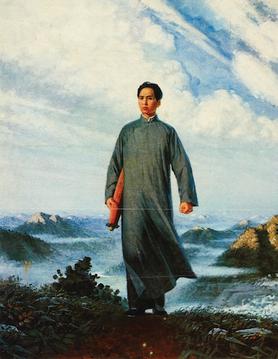
After decades of Mao Zedong’s “cultural revolution” vision of China, major economic reforms began following the Third Plenum of the National Party Congress’s 11th Central Committee, where the party decided that the Chinese economy had to be drastically changed in order to compete with competitive western markets and prominent emerging eastern markets like Japan and South Korea.
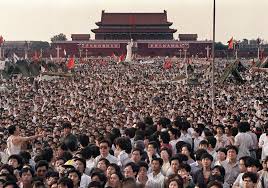
These economic reforms were a success, and China’s economy grew at a rapid rate. However, this economic reform also lead to an influx of new thought that resonated within the younger Chinese generation. This new thinking tended to criticized the Chinese government for its totalitarianism. The criticism of the Chinese government came to a climax in when students began protesting in Beijing following the death of former general secretary, Hu Yaobong, in April of 1989.. These protests grew in size as people who wanted general economic, political, and social reforms joined the students. The Chinese government initially warned against protesting but would not actively stop them. Following weeks of protest, martial law was declared.
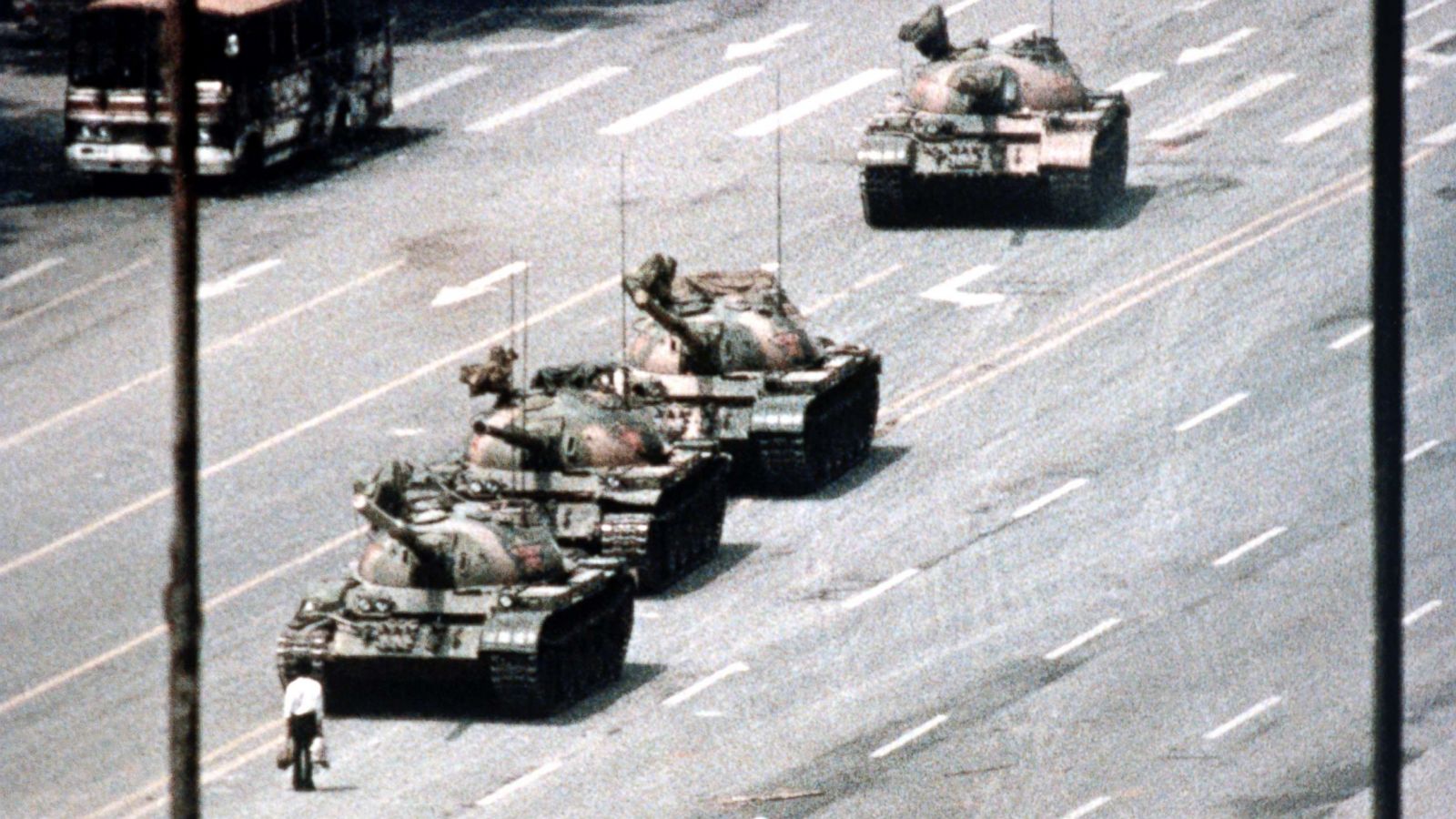
On June 3, tanks and soldiers were dispatched to Tiananmen square in Beijing. They opened fire upon or ran over the crowds of people who attempted to block their advance. This is referred to now as the “Tiananmen square incident” (or massacre).
Nearly a million protestors gathered in Tiananmen square alone in order to speak out against a system that they felt was unjust. In this scenario, the Chinese people themselves are Caliban because were abused and taken advantage of by a government with complete control.
On the other hand, the Chinese government is Prospero. The Chinese government ultimately silenced these protests in order to preserve itself; a single-party state can not possibly survive in a democracy. The brutality committed by the Chinese military was done solely to demonstrate who had authority and who did not within China. The incident is similar to Prospero’s torture of Caliban whenever he does not perform adequately in his daily tasks.
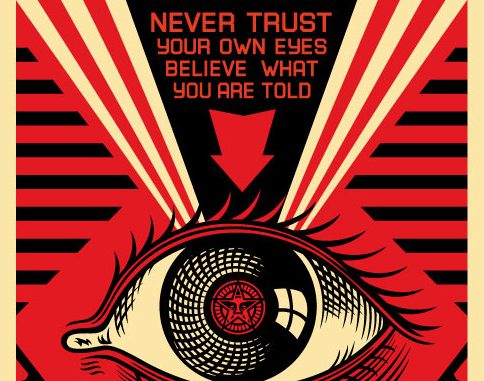
In Anne Marie Brady’s paper, “Guiding Hand: The Role of the CCP Central Propaganda Department in the Current Era,” she states that the Chinese communist party has a “central, guiding role over the whole of Chinese society (58). She also compares the communist party to the Catholic church in medieval Europe, stating that China’s propagandists “are like priests guiding their flock” (59). She outlines that following the “crackdown on the student democracy movement” in 1989 that the Chinese government placed an equal emphasis on economic reforms and a “renewed emphasis on propaganda and political thought work” (59).
China radically changed the information that was available to its citizens following Tiananmen square. The communist party realized that while it can use words (in the form of propaganda) to sway support –or at least compliance– for the government, words can also be used by the people to criticize and test the previously unchallenged authority of the Chinese government.
Bibliography
Brady, A.-M., 2006. Guiding Hand: The Role of the CCP Central Propaganda Department in the Current Era. Westminster Papers in Communication and Culture, 3(1), pp.58–77. DOI: http://doi.org/10.16997/wpcc.15
Editors of Encyclopedia Britannica. “Tiananmen Square Incident.” Encyclopedia Britannica . 16 January 2019. <https://www.britannica.com/event/Tiananmen-Square-incident>.

 Andrew's Discussion of Various Empires